Tuesday, 16 September 2014

International Development (Official Development Target) Bill

Fiona Bruce supports International Development Bill

Fiona Bruce MP, Member of the International Development Select Committee, voted on Friday to support the International Development (Official Development Target) Bill, of which she was a sponsor.
The Bill aims to legislate to ensure that the 0.7% international development funding target that has now been achieved by the current Government is maintained. This level of funding helps to ensure that there is no annual debate on the funding level but the UK is able to maintain a consistent level of funding to the poorest countries in the world who desperately need that help and stability, meaning, doctors, nurses, teachers and providers of those services we in this country take for granted, can be certain they will have the resources to continue their work.
Speaking in the debate Fiona said
“Britain should be rightly proud of being the first G8 country to reach the internationally agreed target of 0.7% GDP expenditure of development support for some of the poorest countries on earth.
But it is not reaching that target which counts, nor legislating for it, as this cross-party supported bill provides – and of which I am proud to be a sponsor – it is what is actually achieved with UK taxpayers’ money to transform the lives of the poorest people on earth which really counts.
And what a transformation the DfID programme is achieving.
Everyone of those people helped is an individual, a mother, a father, a child, with loved ones, hopes and dreams.
This was brought home to me many years ago in Tanzania – as indeed was just how rich we are, one of the richest countries on earth – spending more on take-away food than we do on development support – this was brought home to me in Tanzania, when I was invited to the home of the headmaster of a school which British people are supporting. I was shocked. He, his wife and their five children did not live in a house. They lived in a container. Their meagre belongings hung up in plastic bags from hooks on the ceiling. Their furniture: a few mattresses which were stacked up against the wall during the day to make space; they had no bathroom or kitchen – the toilet was a communal latrine and their kitchen was a charcoal fire on the edge of the road. And they had just one chair which, with the hospitality so characteristic of such people, they invited me to sit in. Their mother gave to one of the children a precious sum of money to buy me a Coca-Cola. The mixture of my emotions at that point cannot be described, but as I say it brought home to me what a difference we can make with a relatively small amount from this country. Tragically, their older boy Sam, aged 15, subsequently died of malaria.
Addressing the needs – and this is the basis of UK Aid provision: need – is quite simply morally and compassionately the right thing to do.
In an era of huge inequalities across the world, and global communication, we cannot say that we do not know of the acute deprivation other peoples suffer; we cannot pass by on the other side.
And I believe that in promoting this Bill, the majority of UK taxpayers are with us in this. Look at how generously they respond to disaster relief requests.
But often, whilst the dramatic tragedy captures the public eye, and swift reactive help to those is essential, and this is not in any way to undermine what personal donations can achieve - what UK Aid is good at is that it can fund projects which might not on the surface appear so dramatic, or catch the news-reel, but which provide fundamental strategic change, through dedication and commitment over time, often working and dialoguing at Governmental level with developing countries, to ensure that UK Aid is in line with their strategic plans, and helping to make the transformational change which they want.
We’ve seen this in Ethiopia, as an International Development Committee, where UK Aid is helping to ensure not only that every child has an education – the number of Children supported by DfID in secondary school alone is 1,670,000. The UK is helping fund 1 in 10 teachers, and providing strategic help – when we visited one school as an IDC, I was very impressed with the biology textbook and syllabus, knowing something of ours. Yes, said the teacher, the UK wrote it for us. Similar fundamental transformation over time for the women of Ethiopia was witnessed by us over time, through continuous, committed service of DfID-sponsored workers, when talking to the women of rural communities, who were being taught of the disadvantages of early marriage – so often seen as a way of family securing generational support, when in fact the opposite – as cause of limiting a young girl’s education, life opportunities, health and well-being. One young woman told us: ‘my older sister was married as a child. She was damaged through sex too early. She was abused by the man. She is now left with two young children, physically unwell, and without a means of livelihood. I am staying in school to get an education and an opportunity for life, and I’ve learnt this is best through the UK Aid projects.’ Imagine that: transformed. Imagine how a nation can be transformed when this is multiplied millions of times. That is what UK Aid is doing across the globe.
And that is why supporting 0.7% is so important – to facilitate the capacity of our country to support consistent, long-term, stable projects, where the funding is committed over the period it takes to make that difference.
And what major transformational projects we can point to, where UK expertise has made the difference – facilitating land registration in Rwanda, to underpin not only the security of people in their own homes, but also trade and business transactions; helping achieve comprehensive voter registration in the same country, to facilitate political participation in democracy; overhauling the revenue system in Burundi to increase the tax-take by hundreds of millions of dollars to in turn pay for schools and hospitals; and working with civil society groups in Burma to promote civil engagement there, in a country where generations have never known it.
Our work in Burma is just one example of demonstrating that UK Aid is not merely selflessly altruistic, but benefits us too. Indeed it is critical. It is critical – helping unstable or potentially dysfunctional Government, or fledgling or fragile democracies; helps promote global stability; and potentially reduce the threat of terrorism on our own shores. The work UK Aid does in this respect is surely win-win, and surely even those who argue for increased defence spending cannot gain-say. As part of this strategic defence and security review, Ministers have pledge 30% of our bilateral aid to fragile and conflict affected countries. Prevention is better than cure.
And too, helping developing countries move out of aid dependency is in our benefit also: stimulating their trade can not only help increase ours, but also  enable them to move from aid dependency to middle-income, and in turn begin to support other countries, as our committee saw in Brazil, which having received UK Aid over time is now a serious development support provider across the southern hemisphere in its own right, with an ability which the UK, with all its expertise, cannot offer: from its own experience of transitioning from aid dependency. It was there is Brazil that is really hit me how respected the work of DfID is across the globe – not just by recipients, but by other countries’ aid workers. This is a constant refrain, wherever the committee travels, and something the UK should be very proud of.
But we must not be complacent. The 0.7% must be effectively used. That is why effective oversight and review of expenditure is so critical, and why I support the principle of this, in this Bill. However, having seen first-hand the work of ICAI – the Independent Commission for Aid Impact – as a member of the Select Committee to which ICAI reports, may I ask the RHM for Berwickshire, Roxburgh and Selkirk, to whom I pay great tribute for bringing forward this Bill, to reconsider the need for a separate organisation to do this, a his Bill provides. ICAI has provided twelve reports to our committee, on subjects such as DfID’s Support to Agricultural Research, DfID’s use of Contractors to deliver Aid plans, DfID’s support for civil society organisation through partnership programmes, the FCO and British Council aid responses to the Arab Spring, as well as reviewing work in individual countries, such as programmes as far apart as Monserrat, Burma, Ghana, and Malawi. As I hope members will recognise, these reports are complex, often comprehensive in scope, and I can confirm they are frequently challengingly critical, as they should be if we are to be effective, accountable and responsible about UK taxpayers’ money. Only this week, we reviewed two of their reports – How DfID learns – and DfID’s Private Sector Development work. ICAI’s colour-coded system certified both these as Amber-Red, and pulled no punches about the challenges DfID has to address if it is to make effective use of the funds in these spheres. In our committee’s report, on the work of ICAI, published 2nd September, we commend the work of ICAI, its independence from DfID – which is critical – and quote Adam Smith International, who have told us ‘ICAI has added significantly to accountability in the UK. We now have one of the most accountable aid programmes in the world, if not the most accountable.’
Members, ICAI itself has been a learning curve since its creation just a few years ago: there is no need to recreate what is an increasingly effective wheel.”

Wednesday, 10 September 2014

Goostrey Station - Theatre in the Quarter

Fiona Bruce MP at Goostrey Station with Theatre in the Quarter

Fiona Bruce joined singers from Theatre in the Quarter at Goostrey Station this week.
This is a community choir including singers from Holmes Chapel and Congleton and across Cheshire, performing well loved songs from the First World War era as a choral commemoration of the service and sacrifice of many during the Great War.
Fiona Bruce said “This is a wonderful commemoration in words, music and song of the service and sacrifice of soldiers, nurses, workers and their families during the Great War. It is particularly moving that it is being performed at Cheshire’s railway stations where so many last goodbyes were shared.”

Tuesday, 9 September 2014

Modern Day Slavery Bill

Modern Day Slavery Bill

Speaking in the Commons during a debate relating to the Modern Day Slavery Bill, Fiona Bruce MP, Vice Chair of the All Party Group against Human Trafficking, said:
“Given that the biggest single reason for trafficking into the UK is the demand for paid sex—accounting for 40% of all victims referred to the NRM in 2013, compared with 36% for labour exploitation and 11% for domestic servitude—any credible British Modern Slavery Bill must do something to address it. We must send a strong message to those men—I am sorry to say it is predominantly men—who exploit a trafficked person for sex that this is not acceptable in our society. 
I am aware that some will respond by saying that paying for sex is already subject to legislation, thanks to section 14 of the Policing and Crime Act 2009, to which the hon. Lady has referred. However, as she has already said, because that involves evidence of force, it is simply ineffective. More needs to be done and the Bill provides us with an opportunity to do it. I also agree with the findings of the all-party group on prostitution and the global sex trade, which has been referred to. As is the case in Finland, this offence is difficult to enforce because of the need to prove that the person concerned is subject to force. We need to accept that it has provided no real deterrent to buying sex from those who are trafficked. 
That is in sharp contrast to the experience of other countries. As has already been mentioned, in Sweden, where it is now simply an offence to buy sex, that legislation has proved easier to enforce, and there have been approximately 3,000 convictions. The message has gone out loud and clear that there is no point trafficking people to Sweden to sell sex. As we have heard, conversations between traffickers have been intercepted, in which they have said, “Don’t bother sex trafficking to Sweden.” No such conversations have been intercepted in relation to the UK since the passage of section 14 of the 2009 Act. 
5.30 pm 
Some people will respond by pointing out that legislating simply to make buying sex an offence would provide a workable law for addressing the demand for trafficking for sexual exploitation, and it could also affect the demand for paid sex when the people concerned have not been trafficked. My response is, good. The evidence from countries such as Sweden and Norway on the one hand, and Finland, England, Wales and Northern Ireland on the other, shows that offences that target buying sex only from trafficked people do not work. Countries that introduced a general offence have affected the level of trafficking. We have to acknowledge that that is the only credible legal mechanism for addressing the global demand for sex trafficking. It is the only way to do something about it in this country. 
Column number: 203 
Academics who have reviewed global data about prostitution and trafficking have concluded: 
“countries that implement harsher laws regarding prostitution seem to get a lower prevalence of trafficking.” 
In contrast, countries such as the Netherlands and Germany that have legalised prostitution now face the challenge of continued exploitation and high rates of trafficking. A retired police detective from Germany described that country as a 
“centre for the sexual exploitation of young women from Eastern Europe, as well as a sphere of activity for organized crime groups from around the world.” 
A chief superintendent from that country said—I grieve to read this— 
“The sex buyers are looking for fresh meat. Nowadays, the average woman in prostitution in Germany is a 18-20 year old trafficked girl from Romania.” 
As well as addressing demand for sex trafficking, this mechanism will address the demand for paid sex where people have not been trafficked, and I believe it will be a source of great good in addressing a number of other issues. Evidence from the Home Office and multiple academic studies demonstrates that the majority of people who sell themselves for sex are incredibly vulnerable and subject to real exploitation. They are often homeless, living in care and suffering from debt, substance abuse or violence. They have often experienced some form of coercion either through trafficking or from a partner, pimp or relative. They are very young, often having entered the sex industry well before the age of 18, and they are frequently addicted to class A drugs. 
Some say that there is a minority of people who sell sex because they really want to, but, like the hon. Member for Slough, I find that difficult to accept. It must be a tiny minority. I believe that at the heart of it, there will always lie some form of oppression or abuse. In the majority of cases, even when there is no element of trafficking, real exploitation is taking place. 
We as legislators have to make a decision. If the law cannot be fashioned in everyone’s best interest, we must ask whether we should prioritise fashioning it out of primary regard for a small minority who engage in that role without compulsion. Our law should embrace new clause 21 and have primary regard for the great, vulnerable majority. 

Wednesday, 20 August 2014

Article from The Daily Telegraph 18th August 2014 - Importance of Marriage

Fiona Bruce MP further develops annual aid mission to Africa

Fiona Bruce MP further develops annual aid mission to Africa

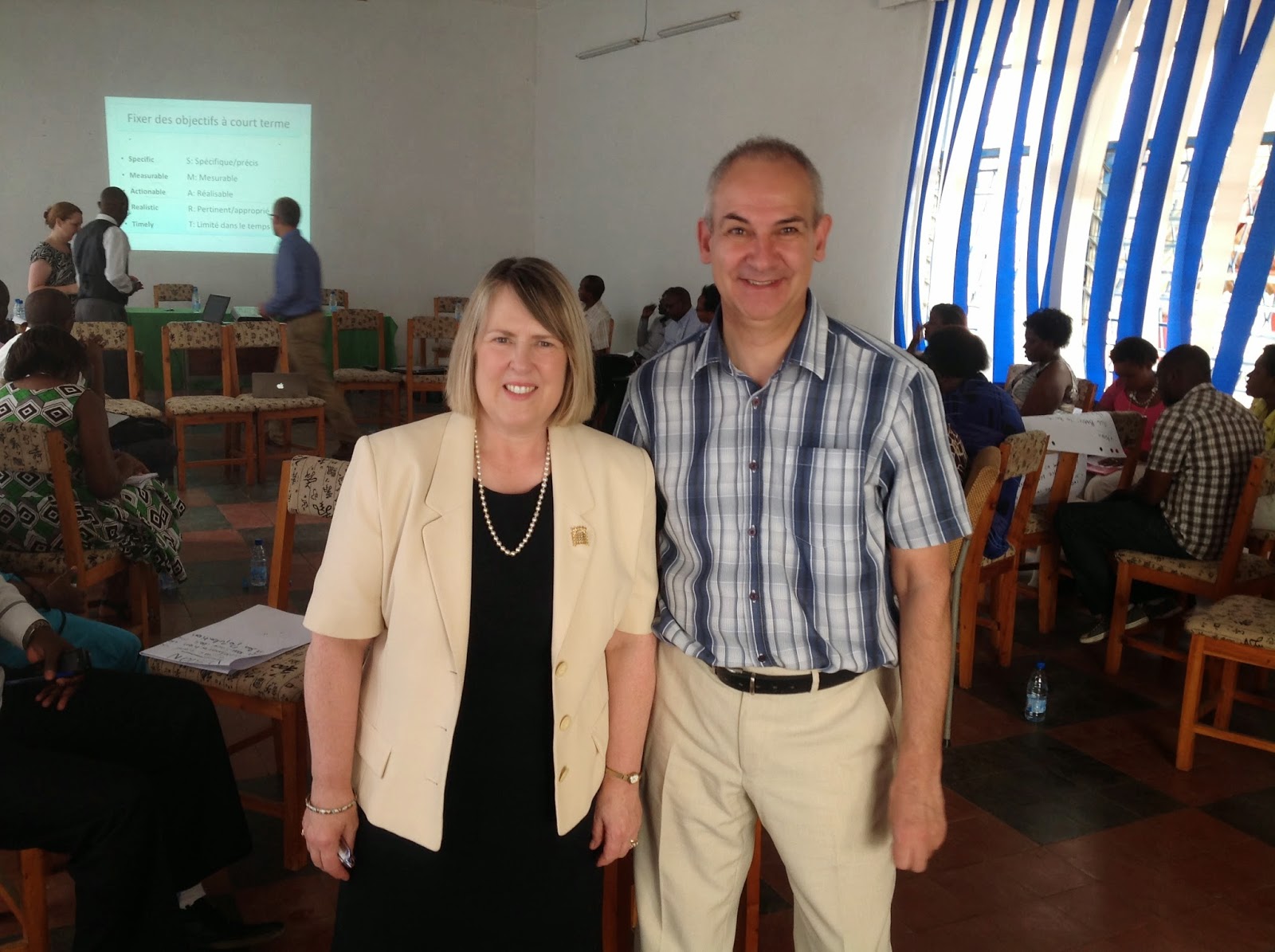
Fiona Bruce MP has led her annual aid mission to Africa during part of her Parliamentary recess time, this year to Burundi, the eighth poorest country in the world. Fiona led a team of 8 volunteers including local Congleton Accountant, Adrian Veale and expanded the project to include two new elements – English teaching for the hospitality industry, and football coaching, in addition to the business training project, devised by Fiona, and now in its fifth year in Africa with over 1000 businesses benefiting from it over those years in both Rwanda and Burundi.
Fiona saidWhen we first went to Burundi, meeting with Government Ministers there identified the need to help improve English spoken in the tourism, hotel and hospitality industry in Burundi. It is a beautiful country, yet little visited by tourists, and improving English as spoken by those working in this area will help build tourism and, through that, much needed inward investment into the fragile economy of this desperately poor country. So we embarked on a new course this year teaching young people working in the hospitality sector to improve their English to enable them to meet, greet and welcome visitors.
Needless to say, I did not undertake the football coaching personally! – but did arrange for an FA coach, Andy Harris, to travel over voluntarily during our week to give football training to hundreds of school children including some from the orphanage which our aid mission supports. Whilst the business training and English teaching are extremely popular, the FA coach was positively mobbed – so much so that 60 youngsters were waiting for him eager to start training even as he stepped off the plane. He started training within minutes of arriving in Burundi!”
Fiona and local Accountant Adrian Veale, both East Cheshire Chamber of Commerce members, led a week long Business Development course in Burundi at the Bujumbura Chamber of Commerce, which, following last year’s visit is now partnered with East Cheshire Chamber. Burundi men and women who attended the course run businesses ranging from transport, mining construction and agriculture to tailoring, restaurants, and printing, and are members of the Bujumbura Chamber. Course content included business goal setting, marketing and financial and people management.
Fiona added:
"Business training is a great way to help some of the poorest countries on earth -many of us know the expression "Give a man a fish and you feed him for a day, but teach him how to fish and you feed him for life."  The aim of this week long .course is to go one step further -to help train people to start and run businesses well -that way they can create jobs and feed a whole community.”
One of the course delegates, a Burundi businessman with a transport and construction business, Ezekial Nyabenda, saidThank you so much for the course. Because of it I am able to respond about my financial status to investors and have the knowledge to make a business plan and split my accounts to different activities!”


Record Fall in Unemployment

Record Fall in Unemployment

This month has seen the biggest annual fall in unemployment in 25 years - and the biggest annual fall in youth unemployment since records began with 1.8 million more people in work than last year, and in the Congleton Constituency 477 more people in jobs than a year ago.

Fiona Bruce MP saidBeing able to find a job is the most important way to improve people's standard of living. The Government’s long-term economic plan is helping to create more real jobs and giving more people the security of a pay packet to provide for themselves and their families. By backing Britain's businesses - cutting the jobs tax, cutting red tape, and investing in vital infrastructure like roads, rail and broadband – the Government has helped create 1.8 million more jobs.”

Fiona Bruce MP asks constituents where they would like a new postbox situated

Fiona Bruce MP asks Constituents where they would like a new postbox

Royal Mail is proposing to erect 2000 additional letter boxes across the country.
Fiona Bruce MP saidI am keen to ensure that residents in my constituency benefit from this proposal and am therefore asking for suggestions for new letterbox locations which I am assured by the Head of Public Affairs of Royal Mail will be considered. Suggestions should be sent to me as soon as possible to Fiona Bruce MP, House of Commons, London, SW1A 0AA or by e-mail to fiona.bruce.mp@parliament.uk, with location specific directions. I am very much aware from the number of letters I receive daily, how important postal services are to my constituents and am keen to ensure that they are as convenient and as efficient as possible for everyone in this area.”